We need constraints
Date completed: July 28, 2026
Most nights, before I even open my laptop to work, I'm already thinking of a dozen small decisions I don't remember making. What to listen to while I work (i.e., a new album, or one I already like, or perhaps I should take a look at my YouTube/Last.fm recommendations)?
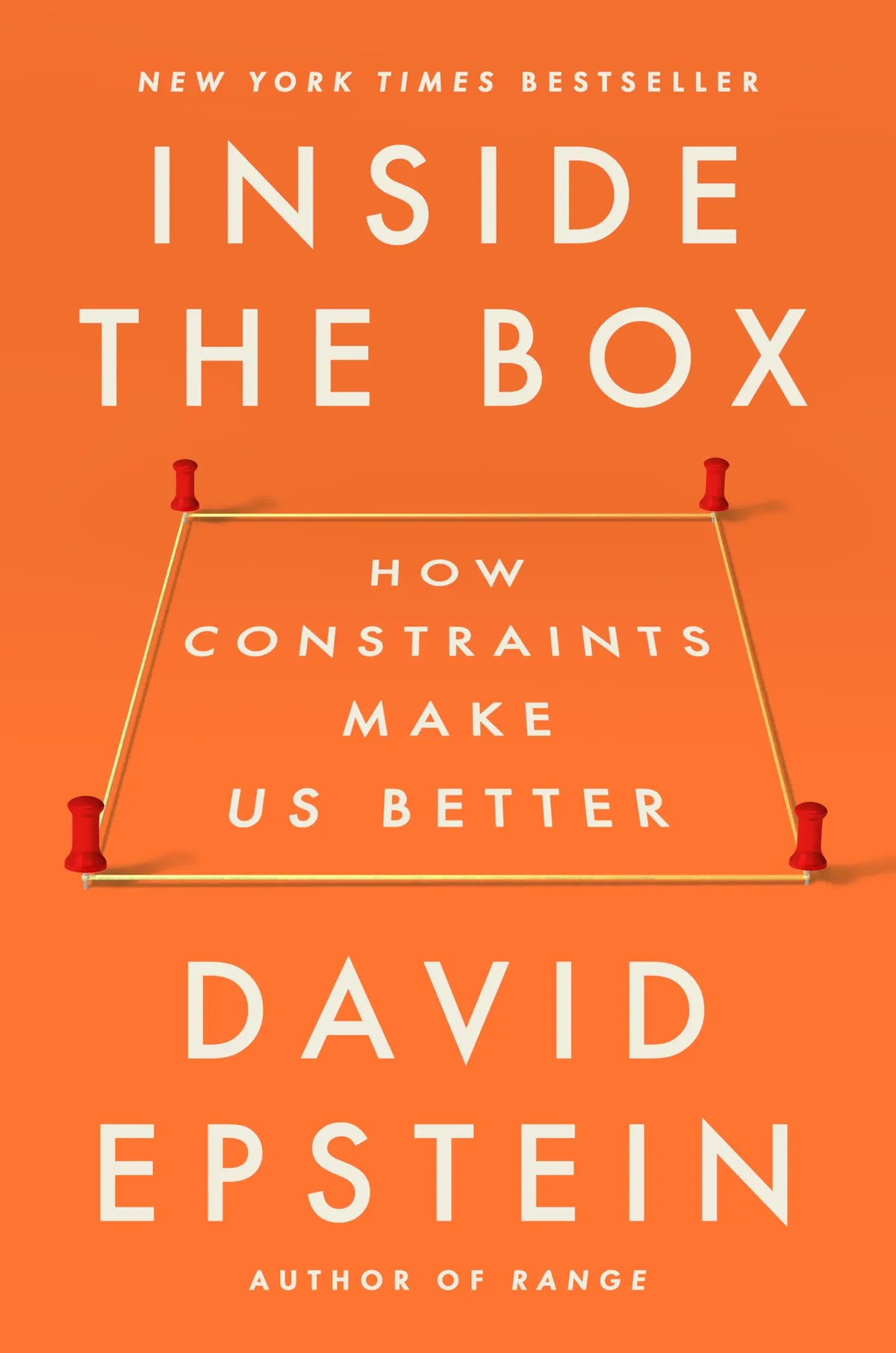
I've been thinking about this after finishing up Inside the Box. David is the same writer behind Range, where he made the case for generalists, for people who dabble widely instead of specializing or narrowing their focus early. This book is the flip side of that argument. He is now making the argument for constraints. For boundaries we set, or that get set for us, and how often those limits can become sources of creativity and focus.
The book follows the same formula his previous book I read did, where he starts with what happens when there are no constraints at all. The one that stuck with me most was General Magic, a company that spun out of Apple in the early '90s trying to build one device that did everything: phone, fax, computer, etc. They raised a bunch of money through selling the dream that it was doable. People believed the hype and invested in it (it was even IPO'ed). I'd never heard the story before, and it was a good sample of what happens when an idea has no boundaries to push against, where it eventually dissolves after a while...1
The counterexamples were more interesting to me, though. George Lucas, wanting visual effects for Star Wars that the technology of the time couldn't create yet, which resulted in him having to build the tools himself, iterate slower than he wanted to, and wait for the field to catch up. Another was the team behind the first Toy Story, which I was surprised to learn came out in 1995 and not the early 2000s like I'd always assumed. They had worked inside the limits of what computers could render at the time, and what eventually resulted still holds up. Constraints didn't shrink those projects. They seem to be the reason those projects became what they became.
Personally, I think choice paralysis has become the cost of how accessible things have become. You can learn almost anything now, try almost any hobby, and follow almost any interest (not necessarily for free), but close enough that the barrier isn't access anymore; it's the decision and the time cost of it. Isn't this what tech was made for?
But options, and deciding on one thing, it turns out, is its kind of labour….
Epstein talks at one point about “chunking” or segmenting or scheduling large blocks of work, i.e., grouping similar tasks together instead of task-switching constantly. Since, according to David (and my experience), switching is known to make people stressed even when these individual tasks are easy.
I do this to myself all day when I bounce between emails, outreach, content review, and back again, and because I don't work a fixed nine-to-five, there's no outer wall forcing me to stop. The flexibility is a privilege, but it also means the choosing never ends. It bleeds into whom I talk to, too, as mentioned previously. Thinking I should check in with one friend, then remembering another I haven't spoken to in a while, then my partner, then a growing list of books to my TBR I keep adding to and barely make a dent in.
All that aside, this book does remind me that sometimes, I should intentionally set boundaries or personal rules that guide me throughout a certain task or goal.2 Agency and freedom to do whatever we want to is important, but it shouldn't make things more difficult for me.
Overall, I quite enjoyed listening to this book, and I think David will probably go on my current favorite non-fiction authors. Perhaps it is time to re-read Range again?
Where in your life have you mistaken having no walls for being free?
PS: Please excuse my weird formatting and that has been permeating across my different posts. I've been experimenting with different styles (this one doesn't have any headings as my previous book post did) and I sort of prefer the free-flow nature of it.
I've been realizing that I don't actually know how to properly "write" in a way that keeps readers engaged and flows well, and have been emulating what I see from others. Years of learning how to write essays in a very specific manner in high school and academic writing in university did not really teach me how to write for fun :/
Always open to feedback or thoughts about these books (and even just to say hello)!
I'm reminded of Elizabeth Holmes' scam with Theranos where it sold dreams so big that her and the team couldn't keep up. If only she made sure to iterate based on the constraints of what was possible first before moving on to the next big leap, things might've turned out differently.↩
A similar idea posed by Oliver Burkeman in his other book, Four Thousand Weeks, which is coincidentally mentioned in this book as well! I wrote a post on this some weeks ago here.↩